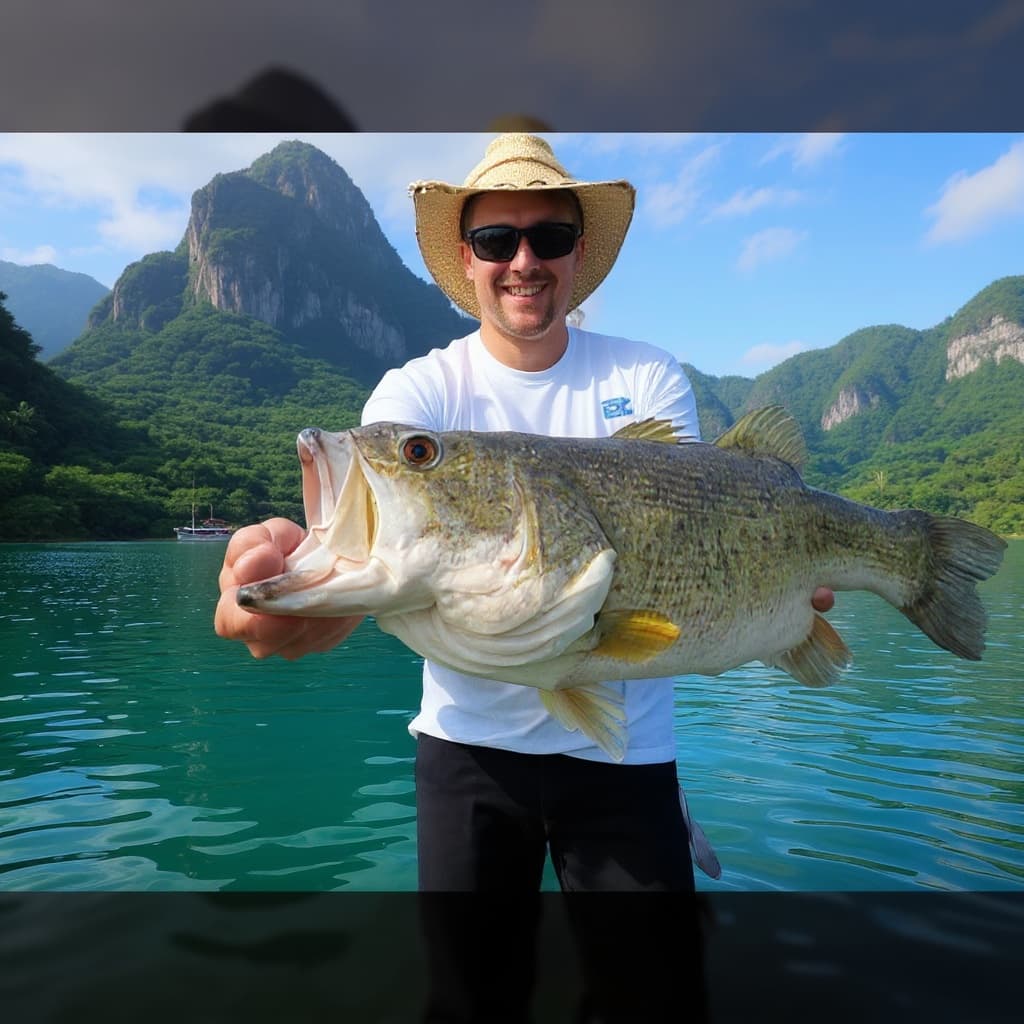
Fishing Forecast: Comedero
Sinaloa · 400 masl
Massive reservoir in the Sierra Madre spanning over 75,000 acres. Ideal trophy bass habitat with abundant submerged timber and aquatic vegetation.
Good
Sun 13 September
Best time: 07:41 AM - 09:41 AM
Factor Breakdown
Presión estable — buenas condiciones
Buena actividad solunar — 2 mayores, 2 menores
Luna Creciente
Viento calmo (4.3 km/h) — buscar áreas con corriente
Parcialmente nublado (56%) — buenas condiciones
Sin lluvia — condiciones normales
24-Hour Forecast
Best Fishing Window
3:00 PM — 6:00 PM6.4/10
Tackle Recommendations
Based on current weather and time conditions
Buzzbait
Topwater
Surface lure with propeller blade that creates vibration and wake on the water.
Walking Bait (Zara Spook)
Topwater
Surface lure with 'walk the dog' zigzag action. Ideal in calm waters.
Flipping Jig
Jig
Heavy jig for precise presentations in timber and thick vegetation.
Hollow Body Frog
Topwater
Frog lure for fishing over thick vegetation. Weedless and effective.
Football Jig (1/2-3/4 oz)
Jig
Football-head jig for dragging along rocky bottoms. Black/blue is the top color.
Senko / Stick Bait
Soft Plastic
Soft plastic stick bait with natural horizontal fall. Wacky or Texas rig.
Solunar Periods
Catch Reports
Best Time to Fish Today
Best time to fish: 2:00 PM–5:00 PM (Score 6.4)
Recommended Lures Today
- 1Buzzbait — Cloud cover 56% in ideal range. Wind 4 km/h favorable
- 2Walking Bait (Zara Spook) — Cloud cover 56% in ideal range. Wind 4 km/h favorable
- 3Flipping Jig — Cloud cover 56% in ideal range. Wind 4 km/h favorable
About Comedero
Comedero, officially Presa José López Portillo, is one of Mexico's largest reservoirs spanning over 75,000 acres. Located in Sinaloa's Sierra Madre Occidental, this dam was built on the San Lorenzo River for hydroelectric power generation and agricultural irrigation.
What sets Comedero apart from other Mexican reservoirs is the sheer volume of submerged structure. Thousands of acres of tropical forest were flooded when the reservoir filled, creating an underwater maze that is perfect habitat for largemouth bass. Depths range from shallow 6-foot flats to over 200 feet near the dam wall.
Comedero's waters maintain temperatures between 68°F and 82°F for most of the year. The abundance of tilapia as a forage species ensures a constant food supply, allowing bass to reach impressive sizes consistently.
The reservoir has earned international recognition for producing massive catch numbers — it is possible to land 50 to 100 bass per day during peak season.
Comedero has earned the nickname 'Numbers Lake' among international anglers for its remarkable ability to produce high catch counts. Several fishing television shows and media outlets have filmed episodes at Comedero, showcasing its action-packed nature. The reservoir is managed under a strict catch-and-release policy enforced by the local fishing cooperatives.
The local community of Comedero has built a sustainable economy around sport fishing tourism. Many families depend on the fishery, working as guides, cooks, lodge staff, and boat operators. This community investment in the resource has been key to maintaining Comedero's productivity over the decades. The cooperative management model used here has become a template for other Mexican fishing destinations.
Fishing Tips
- 1Fish with jigs and crankbaits around submerged timber, which is the dominant structure at Comedero.
- 2Use 30-50 lb braided line to pull bass out of the wood without breaking off.
- 3White and chartreuse spinnerbaits are particularly effective when the water has a slight stain.
- 4Focus your effort on the first 3 hours of morning and the last 2 hours before sunset.
- 5Carry a long-handled landing tool when fishing the timber — trying to lip a bass tangled in branches is how rods get broken and fish get lost.
- 6Comedero's timber patterns change with water level fluctuations — ask your guide what the current lake level trend is, as rising water activates new zones.
- 7Bring two identical rod setups for your primary technique so a broken line or stuck lure doesn't cost you fishing time in the hot bite.
Seasonal Fishing Guide
November through January launches Comedero's peak season as water temperatures descend from 82°F to the ideal 72-76°F range. Bass become increasingly active and move from deep timber to the edges of flooded forests. The sheer volume of submerged structure means fish spread out, but finding productive areas leads to explosive action. Spinnerbaits and crankbaits retrieved through the timber produce multiple fish per hour.
February and March represent the pre-spawn peak at Comedero. Bass push into 6-12 foot depths along protected coves and secondary points. This is when catch numbers reach their highest — 50 to 100 bass per day is achievable for skilled anglers. The fish are aggressive and willing to chase moving baits. Lipless crankbaits, chatterbaits, and swimbaits all produce at elite levels.
April through June covers the spawn and early summer transition. Bass in the 3-6 foot range can be found on harder substrates during April. By May, post-spawn fish scatter into the timber and become more lethargic. Slower presentations like jigs and Texas-rigged soft plastics become necessary. June fishing focuses on early morning and late evening windows.
July through October is the hot season. Temperatures frequently exceed 85°F, and bass seek the deepest, shadiest timber available. Dedicated anglers can still find success with jigging spoons and deep-cranking the main lake timber. Tropical storms bring periodic rain that temporarily cools the water and triggers feeding frenzies at creek entrances.
Fish Species Guide
Largemouth bass at Comedero average 2-4 pounds, but what makes this fishery exceptional is the volume of fish combined with the presence of trophy specimens in the 6-10 pound class. The bass relate primarily to the vast fields of standing and fallen timber that define Comedero's underwater landscape. They are opportunistic feeders that respond aggressively to moving baits that deflect off wood. The best all-around approach is a 1/2 oz spinnerbait or medium-diving crankbait worked through timber lanes.
Tilapia are incredibly abundant at Comedero and form the base of the food chain. Schools of juvenile tilapia can be seen dimpling the surface throughout the day, particularly in protected bays. Their year-round spawning ensures bass always have easy access to high-protein forage. This abundance is the primary reason Comedero bass grow quickly and maintain healthy body condition.
Carp (Cyprinus carpio) round out the species mix, reaching impressive sizes of 10-20 pounds in Comedero's fertile waters. While not commonly targeted by visiting bass anglers, carp provide excellent sport on light tackle and are highly valued by local fishermen for food. They are most often found rooting in muddy shallows and along vegetated shorelines. Corn, dough balls, and small boilies are effective bait for anglers targeting them specifically.
How to Get There
Access is via flights to Mazatlán (MZT) or Culiacán (CUL). Lodges arrange ground transportation that takes approximately 3-4 hours over mountain roads. The best-known lodge is Ron Speed's Adventures, which has operated for decades. Booking months in advance is recommended during peak season.