Fishing Forecast: El Novillo
Sonora · 350 masl
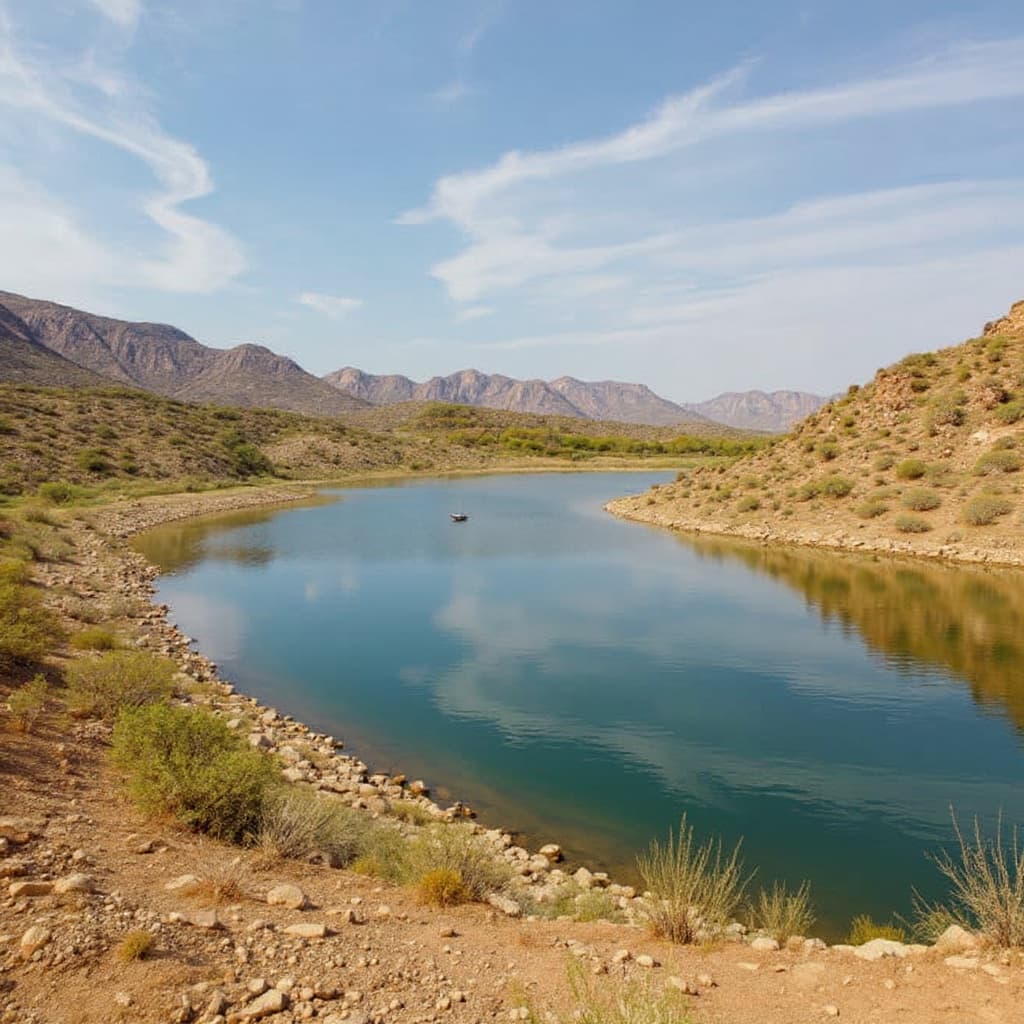
Large reservoir in the Sonoran desert with crystal-clear water. Excellent bass fishing in spring as temperatures rise.
Good
Sun 13 September
Best time: 07:56 AM - 09:56 AM
Factor Breakdown
Presión estable — buenas condiciones
Buena actividad solunar — 2 mayores, 2 menores
Luna Creciente
Brisa ligera (8.4 km/h) — ideal para lobina con ráfagas
Poco nublado (25%) — lobinas en estructura
Sin lluvia — condiciones normales
24-Hour Forecast
Best Fishing Window
8:00 PM — 11:00 PM7.0/10
Tackle Recommendations
Based on current weather and time conditions
Walking Bait (Zara Spook)
Topwater
Surface lure with 'walk the dog' zigzag action. Ideal in calm waters.
Medium Crankbait (6-12ft)
Crankbait
Medium-diving crankbait, excellent near submerged timber.
Small Swimbait (3-4in)
Swimbait
Compact swimbait for average-size bass. Good search bait.
Hollow Body Frog
Topwater
Frog lure for fishing over thick vegetation. Weedless and effective.
Football Jig (1/2-3/4 oz)
Jig
Football-head jig for dragging along rocky bottoms. Black/blue is the top color.
Senko / Stick Bait
Soft Plastic
Soft plastic stick bait with natural horizontal fall. Wacky or Texas rig.
Solunar Periods
Catch Reports
Best Time to Fish Today
Best time to fish: 8:00 PM–11:00 PM (Score 7.0)
Recommended Lures Today
- 1Walking Bait (Zara Spook) — Cloud cover 25% in ideal range. Wind 8 km/h favorable
- 2Medium Crankbait (6-12ft) — Cloud cover 25% in ideal range. Wind 8 km/h favorable
- 3Small Swimbait (3-4in) — Wind 8 km/h favorable. Ideal time: morning
About El Novillo
El Novillo, officially Presa Plutarco Elías Calles, is a large reservoir in the Sonoran desert on the Yaqui River. Surrounded by desert landscapes with cacti and arid mountains, this dam offers a unique fishing experience in a completely different setting from the tropical reservoirs of Sinaloa.
El Novillo's waters are exceptionally clear, with visibility exceeding 25 feet under optimal conditions. Water temperature varies significantly between seasons, from 54°F in winter to 86°F in summer.
A special feature of El Novillo is the presence of striped bass in addition to largemouth bass. Striped bass can reach impressive sizes and provide a spectacular fight.
Peak season is spring (March-May) and fall (October-November), when water temperatures are in the ideal range and bass feed actively.
El Novillo's dual-species fishery of largemouth and striped bass makes it unique in the Mexican fishing landscape. Anglers seeking variety beyond the standard Mexican bass experience will find El Novillo deeply rewarding. The desert canyon scenery rivals anything in the American Southwest, with saguaro cacti dotting the hillsides above emerald waters.
The local Yaqui communities have fished these waters for generations and possess deep knowledge of the reservoir's seasonal patterns. Working with a local guide who understands the unique behavior of El Novillo's striped bass population is highly recommended for first-time visitors.
Fishing Tips
- 1In such clear water, use fluorocarbon line and finesse presentations like drop shot and ned rig.
- 2Striped bass are best caught with deep-trolling lures and jigging spoons.
- 3Fish transition zones between rock and sand, where bass ambush baitfish.
- 4Bring sun protection clothing for the desert sun — temperatures can be extreme.
- 5Bring striper-specific tackle: a 7-foot medium-heavy spinning rod with 20 lb braid and 15 lb fluoro leader handles both largemouth and striped bass effectively.
- 6Desert reservoirs lose and gain heat rapidly — monitor water temperature hourly, as even a 2°F change can trigger or shut down feeding.
- 7Carry at least 2 gallons of drinking water per person and a shade canopy — the Sonoran sun is unforgiving and dehydration happens fast.
Seasonal Fishing Guide
March through May is El Novillo's prime season. As the Sonoran desert warms, water temperatures climb from winter lows of 58°F into the ideal 66-74°F spawning range. This triggers aggressive pre-spawn feeding along the clear rocky shorelines. Largemouth bass push into 4-10 foot depths on gravel transitions, while striped bass become active along the main lake points. Jerkbaits and finesse worms in natural colors are deadly in the crystal-clear water.
October and November provide a secondary peak as temperatures retreat from summer extremes. The fall turnover reinvigorates bass that have been sluggish through the brutal Sonoran summer. Bass feed aggressively on threadfin shad schools, creating surface-busting blitzes that are visible from considerable distances. Topwater walking baits and lipless crankbaits match the feeding frenzy perfectly.
June through September is the toughest period. Water temperatures soar past 85°F, and bass retreat to the deepest canyon structure available. The saving grace is the early morning window from 5:00-7:00 AM when surface temperatures briefly drop. Dedicated anglers target striped bass with vertical jigging techniques in 30-50 foot depths during this period.
December through February sees the coldest conditions. Water drops below 60°F in the exposed desert reservoir, slowing metabolism significantly. Slow-rolling spinnerbaits and blade baits worked painfully slowly along 15-25 foot drop-offs produce scattered but often quality catches.
Fish Species Guide
Largemouth bass (Micropterus salmoides) at El Novillo are well-adapted to the desert environment, displaying vivid green coloration from the clear water and rocky habitat. Average size runs 2-4 pounds, with 5-7 pounders available for skilled anglers targeting structure transitions. The bass relate primarily to rocky points, boulder fields, and the few areas with submerged vegetation. In the ultra-clear conditions, light line (8-10 lb fluorocarbon) and natural presentations are essential.
Striped bass (Morone saxatilis) are El Novillo's unique drawing card — few other Mexican reservoirs support a viable striped bass population. These powerful pelagic predators roam the open water, chasing schools of shad and small tilapia. Typical sizes range from 5-15 pounds, with occasional fish exceeding 20 pounds. Stripers are best targeted with trolling techniques, jigging spoons, and large swimbaits fished in 20-40 foot depths. Their fight is explosive — powerful runs and headshakes that test tackle to its limits.
Catfish species include channel catfish and flathead catfish. Both reach good sizes in El Novillo's deep, clear waters. Channel cats averaging 4-8 pounds respond to cut bait and nightcrawlers fished on the bottom near deep rock piles. Flatheads are less common but can exceed 25 pounds.
How to Get There
Fly into Hermosillo (HMO), Sonora's capital. From there, the road transfer takes approximately 3 hours east. Lodging options near the dam are limited, but the town of Sahuaripa offers basic hotels.