Fishing Forecast: Huites
Sinaloa · 250 masl
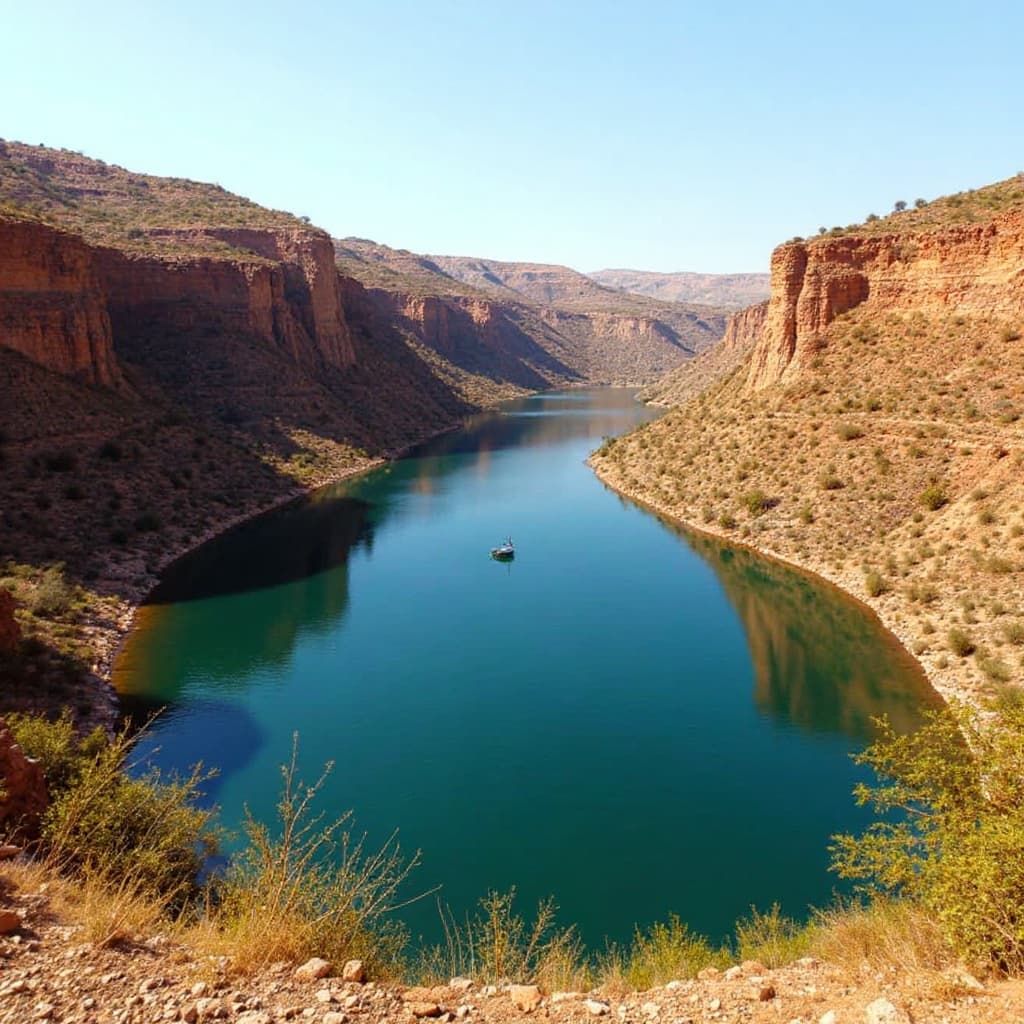
Enormous reservoir on the Fuerte River with excellent bass fishing. Clear, deep water with rocky structure that favors trophy-sized bass.
Good
Sun 13 September
Best time: 07:51 AM - 09:51 AM
Factor Breakdown
Presión estable — buenas condiciones
Buena actividad solunar — 2 mayores, 2 menores
Luna Creciente
Brisa ligera (9.8 km/h) — ideal para lobina
Poco nublado (31%) — lobinas en estructura
Lluvia fuerte (18.7mm) — agua turbia, pesca difícil
24-Hour Forecast
Best Fishing Window
8:00 AM — 11:00 AM6.8/10
Tackle Recommendations
Based on current weather and time conditions
Walking Bait (Zara Spook)
Topwater
Surface lure with 'walk the dog' zigzag action. Ideal in calm waters.
Medium Crankbait (6-12ft)
Crankbait
Medium-diving crankbait, excellent near submerged timber.
Flipping Jig
Jig
Heavy jig for precise presentations in timber and thick vegetation.
Small Swimbait (3-4in)
Swimbait
Compact swimbait for average-size bass. Good search bait.
Paddle Tail Swimbait
Soft Plastic
Soft bait with paddle tail. Versatile on weighted hook or jighead.
Shallow Crankbait (0-6ft)
Crankbait
Shallow-running crankbait, ideal for shallow structure areas.
Solunar Periods
Catch Reports
Best Time to Fish Today
Best time to fish: 8:00 AM–11:00 AM (Score 6.8)
Recommended Lures Today
- 1Walking Bait (Zara Spook) — Cloud cover 31% in ideal range. Wind 10 km/h favorable
- 2Medium Crankbait (6-12ft) — Cloud cover 31% in ideal range. Wind 10 km/h favorable
- 3Flipping Jig — Cloud cover 31% in ideal range. Wind 10 km/h favorable
About Huites
Huites, officially Presa Luis Donaldo Colosio, is an impressive reservoir on the Fuerte River in northern Sinaloa. Completed in 1995, it is one of Mexico's newest hydroelectric dams and has developed rapidly as a fishing destination.
The dam has massive capacity and its waters extend through deep Sierra Madre canyons. Water clarity is remarkable, with visibility exceeding 15 feet during the dry season. Maximum depth exceeds 330 feet.
The natural rocky canyon structure, combined with submerged trees in the more recently flooded areas, creates diverse habitat. Bass at Huites tend to be less numerous than at El Salto or Comedero, but their average size is larger.
The scenery is spectacular, with vertical canyon walls and emerald-colored water making every fishing day a unique visual experience.
Huites represents the emerging frontier of Mexican bass fishing. As the most recently built major dam in Sinaloa (completed 1995), the fishery continues to develop and improve. Trophy hunters particularly value Huites because the fishing pressure is significantly lower than at El Salto or Comedero, meaning the bass are less educated and more willing to strike.
The emerald-green canyon waters of Huites are among the most photogenic in all of Mexican bass fishing. The visual experience rivals the fishing itself, with towering canyon walls draped in tropical vegetation providing a stunning backdrop to every fishing session.
Fishing Tips
- 1Fish rocky points and canyon walls with heavy jigs and deep-diving lures.
- 2Bass at Huites respond well to natural presentations — use colors that mimic tilapia or shad.
- 3Explore side canyon entrances where bass ambush prey.
- 4Bring clear-water gear: fluorocarbon line and finesse presentation lures.
- 5Invest in quality polarized sunglasses (amber or copper lens) — Huites' exceptional water clarity makes sight-fishing possible, and spotting bass holding on structure is a massive advantage.
- 6Use a slow sinking lure approach in the canyons — let your bait fall naturally along the canyon wall face, as bass often strike during the descent rather than on the retrieve.
- 7Bring seasickness medication if you're prone — the narrow canyons can create wind tunnel effects that generate surprisingly choppy conditions.
Seasonal Fishing Guide
October and November herald the start of Huites' productive season as summer heat finally breaks. Water temperatures drop from the low 80s°F into the comfortable 74-78°F range. Bass begin moving from their deep canyon summer holdouts toward the mouths of side canyons and transition zones. Crankbaits and jerkbaits worked along canyon walls and rocky points produce the first quality catches of the season.
February through April is Huites' prime window. Water clarity reaches its peak during the dry season, with visibility often exceeding 15 feet. Temperatures settle into the 68-74°F zone, triggering strong pre-spawn and spawn activity. Bass move onto rocky ledges and gravel areas in 6-12 feet of water. This is when Huites reveals its trophy potential — the average size here exceeds other Sinaloa lakes, with 5-8 pound fish being regular occurrences. Finesse techniques like drop shot and shaky head dominate in the ultra-clear water.
May and June mark the post-spawn transition into summer. Bass gradually retreat to deeper canyon structure as water warms past 78°F. Vertical jigging along canyon walls becomes the primary technique, with 3/4 oz football jigs and heavy drop shots producing bass holding at 20-35 foot depths.
July through September is the monsoon season. Heavy rains muddy the normally clear water and raise the lake level significantly. While this disrupts sight-fishing opportunities, it creates temporary windows of exceptional topwater action as bass gorge on disoriented baitfish in the murky inflows.
Fish Species Guide
Largemouth bass at Huites benefit from the reservoir's clear water and rocky canyon structure, growing to impressive sizes. The average bass weighs 3-5 pounds — noticeably larger than at more heavily fished Sinaloa lakes. Fish exceeding 8 pounds are caught each season, with the potential for double-digit specimens in the deeper canyon areas. Huites bass are structure-oriented predators that patrol canyon walls, rocky points, and boulder fields. In the clear water, natural presentations with finesse lures outperform power-fishing approaches.
Tilapia serve as the primary forage base, though their populations fluctuate more dramatically at Huites compared to shallower reservoirs. Schools of tilapia are most concentrated around protected bays and shallow canyon terraces. Their seasonal movements drive bass positioning — when tilapia push shallow to spawn, bass follow.
Channel catfish (Ictalurus punctatus) reach respectable sizes in Huites' deep, oxygenated waters. Fish in the 4-10 pound range inhabit the deeper canyon pools and feed primarily at night or during low-light conditions. They are a popular target among local anglers who fish from shore using cut bait and liver. The catfish population helps balance the ecosystem by consuming organic debris and bottom-dwelling invertebrates.
How to Get There
The nearest airport is Los Mochis (LMM), followed by Culiacán (CUL). Ground access takes 3-4 hours over mountain roads. Some operators offer service from El Fuerte, a charming colonial town that serves as a base.