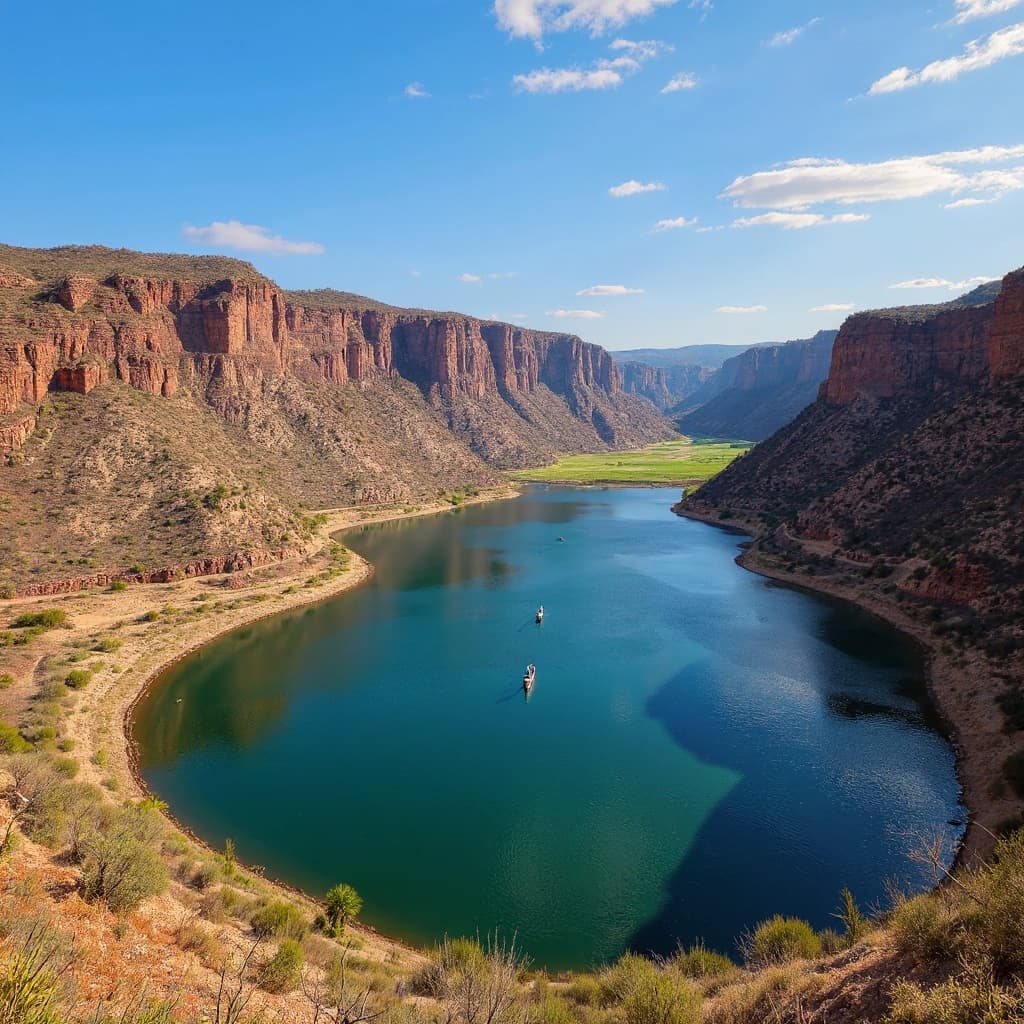
Fishing Forecast: Infiernillo
Michoacán · 180 masl
One of Mexico's largest dams on the Balsas River. Warm water with active bass during the winter months.
Good
Sun 13 September
Best time: 07:24 AM - 09:24 AM
Factor Breakdown
Presión estable — buenas condiciones
Buena actividad solunar — 2 mayores, 2 menores
Luna Creciente
Viento calmo (3.4 km/h) — buscar áreas con corriente
Nublado (82%) — lobinas activas en superficie
Lluvia moderada (4.1mm) — buena actividad
24-Hour Forecast
Best Fishing Window
7:00 AM — 10:00 AM6.7/10
Tackle Recommendations
Based on current weather and time conditions
Buzzbait
Topwater
Surface lure with propeller blade that creates vibration and wake on the water.
Colorado Blade Spinnerbait
Spinnerbait
Colorado blade spinnerbait for maximum vibration. Perfect in murky post-rain water.
Flipping Jig
Jig
Heavy jig for precise presentations in timber and thick vegetation.
Hollow Body Frog
Topwater
Frog lure for fishing over thick vegetation. Weedless and effective.
Senko / Stick Bait
Soft Plastic
Soft plastic stick bait with natural horizontal fall. Wacky or Texas rig.
Walking Bait (Zara Spook)
Topwater
Surface lure with 'walk the dog' zigzag action. Ideal in calm waters.
Solunar Periods
Catch Reports
Best Time to Fish Today
Best time to fish: 7:00 AM–10:00 AM (Score 6.7)
Recommended Lures Today
- 1Buzzbait — Cloud cover 82% in ideal range. Wind 3 km/h favorable
- 2Colorado Blade Spinnerbait — Cloud cover 82% in ideal range. Wind 3 km/h favorable
- 3Flipping Jig — Cloud cover 82% in ideal range. Wind 3 km/h favorable
About Infiernillo
Infiernillo, officially Presa Adolfo López Mateos, is one of Mexico's largest dams, built on the powerful Balsas River on the border of Michoacán and Guerrero. Its name 'Infiernillo' (little hell) reflects the region's high temperatures.
With a surface area exceeding 100,000 acres, Infiernillo is a vast body of water with multiple arms and bays offering diverse fishing conditions. Waters are warm year-round, with temperatures between 72°F and 90°F.
The reservoir produces enormous quantities of tilapia that serve as the primary food source for bass. The tilapia industry is economically important in the region, and the abundance of this forage fish directly benefits sport fishing.
Winter months (November-March) offer the best conditions, when water temperatures drop to the ideal range and bass feed aggressively before the spawn.
Infiernillo is one of Mexico's most important multi-use water bodies. Beyond sport fishing, the reservoir supports a massive commercial tilapia industry, hydroelectric generation, irrigation, and transportation. The Balsas River basin it occupies is one of the most ecologically diverse watersheds in Mexico.
The name 'Infiernillo' — little hell — perfectly captures the extreme climate that defines fishing here. For anglers willing to brave the heat and plan their trips during the cooler months, the rewards include abundant bass, stunning landscapes, and an authentically Mexican fishing experience far from the tourist trail.
Fishing Tips
- 1Swimbaits imitating juvenile tilapia are the most effective lure at Infiernillo.
- 2Fish the reservoir arms where creeks enter — current concentrates the fish.
- 3Avoid the hottest months (June-August) when water temperatures exceed 86°F.
- 4Look for tilapia schools near the surface — bass are usually below, hunting.
- 5A high-quality swimbait in the 4-6 inch range with a tilapia color pattern is the single most important lure to pack for Infiernillo — it matches the primary forage perfectly.
- 6Bring binoculars to scan for surface-feeding tilapia schools — where you see tilapia activity, bass are hunting below.
- 7Stay hydrated and cover exposed skin — Infiernillo is one of the hottest fishing destinations in Mexico, with shade being virtually nonexistent on the open water.
Seasonal Fishing Guide
November through March is Infiernillo's prime season. Water temperatures drop from the scorching summer highs of 90°F+ into the productive 75-82°F range. Bass that spent the summer in deep refuge zones move to accessible mid-depth structure and begin feeding aggressively. Swimbaits and crankbaits imitating juvenile tilapia are devastating during this window. The massive tilapia population fuels a feeding frenzy as bass prepare for the upcoming spawn.
The spawning season (February-April) sees bass move to shallower protected areas. Infiernillo's warm water means the spawn occurs earlier and extends longer than at cooler reservoirs. Sight fishing is possible in the clearer arms of the reservoir, and bed-fishing techniques produce the largest bass of the year.
April through June is the post-spawn transition. Bass scatter throughout the vast reservoir and become more challenging to pattern. The key is locating tilapia schools — bass are never far from their primary food source.
July through October is extremely challenging. The 'Infiernillo' (little hell) earns its name as water temperatures exceed 90°F. Bass retreat to the deepest available structure and feed primarily at night. Only the most dedicated anglers fish during this period, targeting the brief dawn window.
Fish Species Guide
Largemouth bass at Infiernillo benefit from the enormous tilapia forage base, growing to healthy sizes of 3-6 pounds with the potential for 8-10 pounders during peak season. The sheer size of the reservoir (100,000 acres) means the bass population is vast but dispersed. Finding concentrations requires understanding the relationship between tilapia schools and bass positioning. Infiernillo bass are less structure-oriented than at rocky canyon lakes, instead following the open-water tilapia schools through the reservoir arms.
Tilapia production at Infiernillo is commercially significant — the reservoir is one of Mexico's most important tilapia fisheries, supporting thousands of commercial fishing families. The commercial tilapia harvest actually benefits sport fishing by preventing overpopulation and maintaining optimal forage-to-predator ratios.
Carp reach impressive sizes in Infiernillo's warm, fertile waters, with fish of 10-25 pounds not uncommon. They are concentrated in the shallower arms and near agricultural runoff areas where nutrient levels are highest.
How to Get There
From Mexico City, take the highway toward Lázaro Cárdenas and exit toward Nueva Italia (5-6 hours). From Morelia, it is approximately 4 hours. La Unión and Nueva Italia are the base communities with available lodging.